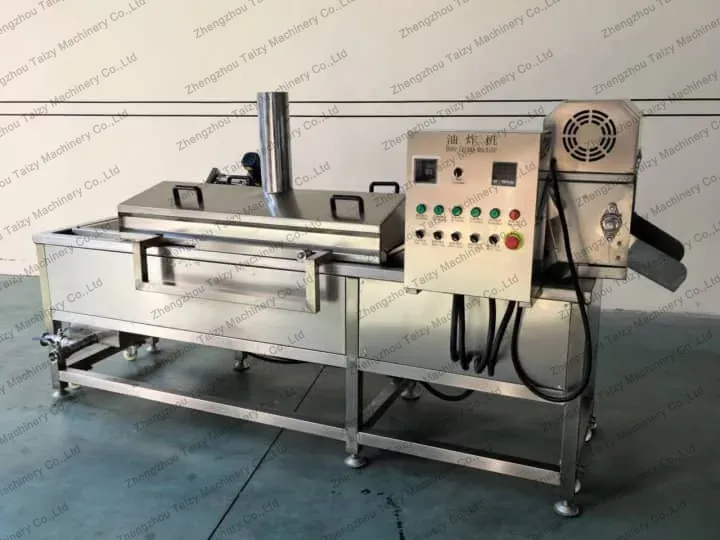
Choosing between an electric and a gas industrial frying machine is an important decision for food manufacturers planning to improve production efficiency or expand their processing capacity. Both heating methods can support commercial frying operations, but the right option depends on local energy costs, available utilities, production requirements, and factory conditions.
Understanding these differences before purchasing equipment can help businesses select a fryer that fits their daily operations and long-term production plans.

The main difference between the two options is how they generate heat. Electric models use electrical heating elements, while gas-fired machines burn fuel to heat the frying oil.
An electric fryer may suit facilities with a stable electrical supply and a preference for straightforward temperature control. A gas-fired model may be worth considering where commercial gas is readily available, and its operating cost is competitive.
Neither option is automatically more economical. Businesses should compare the complete operating requirements rather than choosing solely by the initial purchase price.
| Comparison factor | Модель: TZ-2500 | Gas frying machine |
| Heat source | Electrical heating elements | Gas burner |
| Installation | Require suitable electrical infrastructure | Require a compatible gas supply and burner installation |
| Temperature control | Depend on the heating and control system | Depend on the burner and control system |
| Operating cost | Influenced by electricity tariffs and consumption | Influenced by gas prices and consumption |
| Обслуживание | Heating elements and electrical components require inspection | Burners, gas connections, and safety systems require inspection |
| Best fit | Facilities with suitable electrical capacity | Facilities with a reliable, economical gas supply |
Actual performance varies by machine design, heating capacity, insulation, oil volume, and production conditions.

An electric model can be a practical option for food processing facilities that have sufficient electrical capacity and want to avoid installing a dedicated gas supply.
Its suitability depends on the available power supply and the machine's total electrical load. Before purchasing, buyers should check the required voltage, phase, total power, and site electrical capacity.
Electric heating can also provide effective temperature control when the machine is equipped with a suitable control system. This matters for products such as potato chips, vegetable crisps, and other fried snacks, where stable frying conditions help maintain consistent color and texture.
However, electricity prices and the cost of supplying sufficient power can make electric heating less economical in some locations. The factory's energy tariff should therefore be included in the purchasing decision.
A gas-fired model may be attractive to manufacturers operating in areas where gas is readily available and offers a competitive cost per unit of useful heat.
For businesses running long production shifts, the difference between local electricity and gas costs can have a significant effect on operating expenses. However, fuel prices alone do not determine the final result. Heating efficiency, burner performance, insulation, and actual production output must also be considered.
Gas installations require appropriate ventilation, gas connections, and safety controls. Buyers should confirm local installation requirements and ensure that the facility can safely support the selected equipment.
For factories without a suitable gas supply, the additional installation work may outweigh the potential energy savings.

Instead of relying on general claims that one heating method is cheaper, manufacturers should calculate the expected energy cost under their own operating conditions.
The comparison should include:
For example, a factory operating an industrial fryer for eight hours per day should compare the expected daily energy cost of both models at its intended production rate. Using supplier-provided consumption estimates and local utility prices makes the comparison more useful than comparing rated power alone.
Buyers should also consider how quickly the machine reaches the required oil temperature and whether it can maintain that temperature during continuous feeding.
The choice also depends on the type of food being processed and the production layout.
For a potato chips factory, a continuous fryer may be needed to maintain a steady flow of sliced potatoes. A manufacturer processing different snack products in smaller batches may prefer a batch fryer with a suitable working capacity.
In either case, the heating method should match the machine's design and the required production output. Businesses planning a complete processing line should also consider upstream preparation, product feeding, oil filtration, discharge, and downstream seasoning or packaging.
Selecting the heating method and production configuration together can help avoid investing in a machine that does not match the factory's actual needs.

Electric and gas frying machines can both serve commercial food production, but their suitability depends on energy prices, available utilities, installation conditions, and production requirements.
Before making a decision, compare the expected operating cost, heating performance, maintenance needs, and required output of each option. A machine selected around the factory's real operating conditions is more likely to deliver long-term value.
Looking for an industrial frying machine for your food processing business? Contact our team with your product type, target capacity, preferred heating method, and local power or gas conditions. We can help you evaluate a suitable frying solution for your production needs.