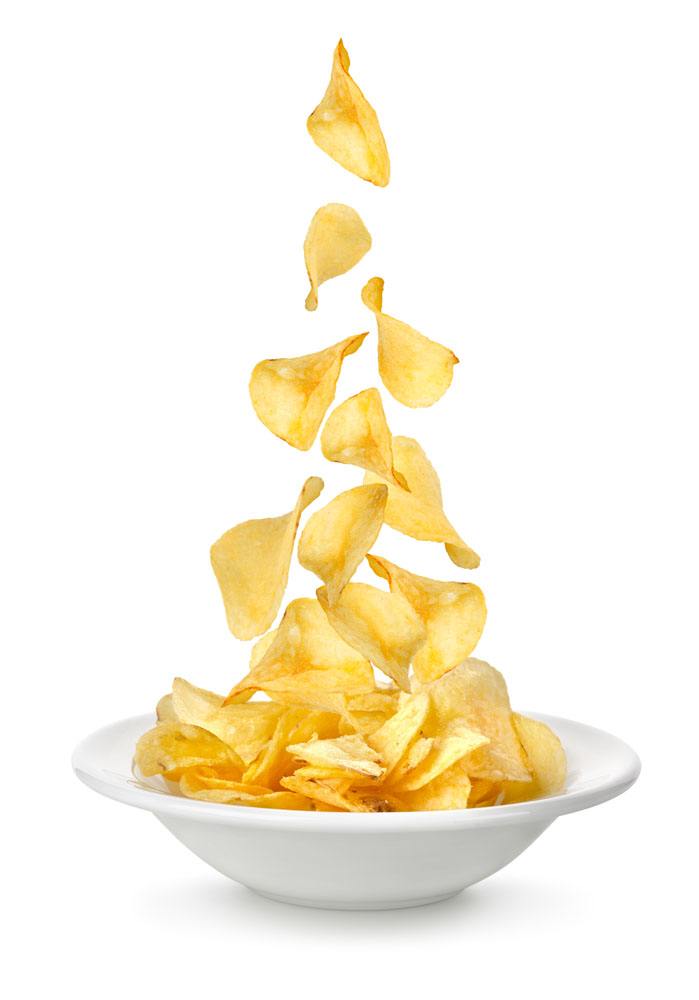
If you can not help yourself in stopping eat potato chips, then blame George Crum. He reportedly created the salty snack in 1853 at Moon's Lake House near Saratoga Springs, New York. Cause George Crum fed up with the continually complaining that potato chips were soggy and not crunchy. Crum sliced the potatoes as thin as possible. He fried them in hot grease and then doused them with salt. The customer loved them, and "Saratoga Chips" quickly became popular at the lodge and throughout New England.
Ostatecznie pojawiła się masowa produkcja do użytku domowego. Ale ponieważ były przechowywane w beczkach lub puszkach, szybko stawały się nieświeże. W latach 20. XX wieku Laura Scudder wynalazła hermetyczną torbę, prasując razem dwa kawałki woskowanego papieru. Dzięki temu chipsy dłużej pozostawały świeże. Dziś często używamy plastikowych lub foliowych torebek do pakowania. Występują w różnych smakach, w tym kwaśnej śmietany i cebuli, barbecue oraz soli i octu.
World War II changed a lot of things, and that includes frytki ziemniaczane. According to Food and Drink in American History, originally people suppose it as "nonessential food", which meant all potato chip production needed to cease until the end of the war. By this time, there were enough manufacturers that they had the clout to successfully lobby for the change in designation, and getting it overturned was one of the best things that could have happened to the potato chip industry for a few reasons.
Za granicą żołnierze również potrzebowali chipsów. Zgodnie z "The Telegraph", były już mocno zakorzenione w brytyjskiej kulturze, a całe statki wojskowe załadowane chipsami (a dokładniej, chrupkami) były transportowane, aby dostarczyć ich chrupiące dobrodziejstwo żołnierzom alianckim na całym świecie.
chipsy ziemniaczane