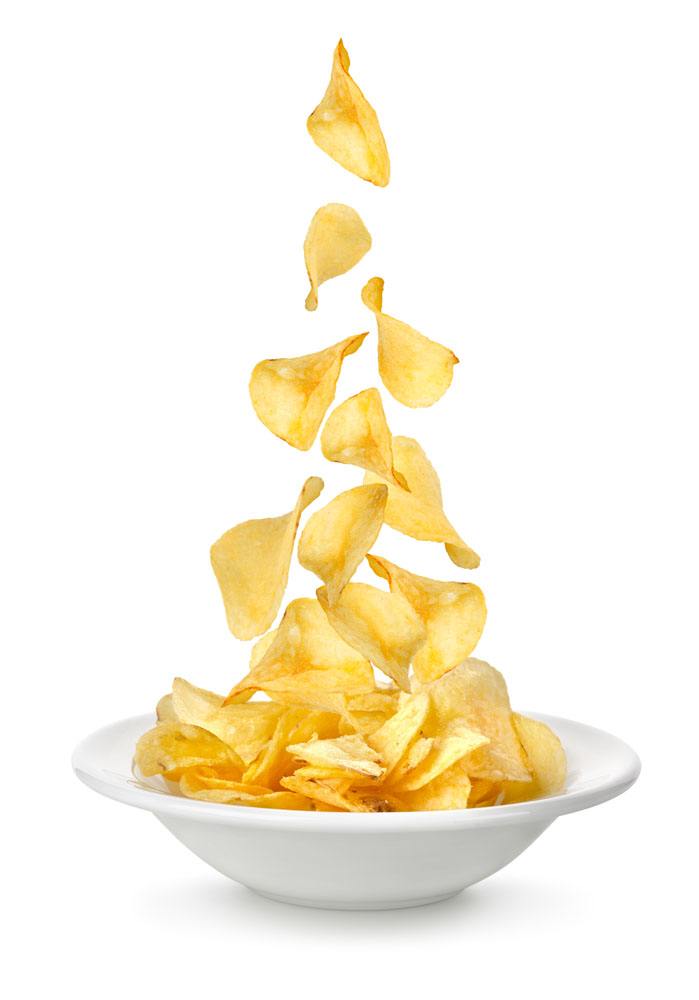
If you can not help yourself in stopping eat potato chips, then blame George Crum. He reportedly created the salty snack in 1853 at Moon's Lake House near Saratoga Springs, New York. Cause George Crum fed up with the continually complaining that potato chips were soggy and not crunchy. Crum sliced the potatoes as thin as possible. He fried them in hot grease and then doused them with salt. The customer loved them, and "Saratoga Chips" quickly became popular at the lodge and throughout New England.
Uiteindelik het massaproduksie vir huisgebruik ontstaan. Maar aangesien hulle in vate of blikke gestoor is, het hulle vinnig oud geword. Toe, in die 1920's, het Laura Scudder die lugdigte sak uitgevind deur twee stukke waspapier aanmekaar te stryk. Dit hou die skyfies langer vars. Vandag gebruik ons dikwels plastiek- of foelie-sakke vir verpakking. Wat verskeie geure insluit, bevat dit ook suurroom en ui, braai, sout en asyn.
World War II changed a lot of things, and that includes skyfies. According to Food and Drink in American History, originally people suppose it as "nonessential food", which meant all potato chip production needed to cease until the end of the war. By this time, there were enough manufacturers that they had the clout to successfully lobby for the change in designation, and getting it overturned was one of the best things that could have happened to the potato chip industry for a few reasons.
In die buiteland het troepe ook skyfies nodig. Volgens The Telegraph was hulle alreeds stewig in die Britse kultuur ingeburger, en hele troepeskippe vol skyfies (of, meer akkuraat, skyfies) is gestuur om hul knapperige goedheid aan Geallieerde troepe regoor die wêreld te lewer.
George Crum