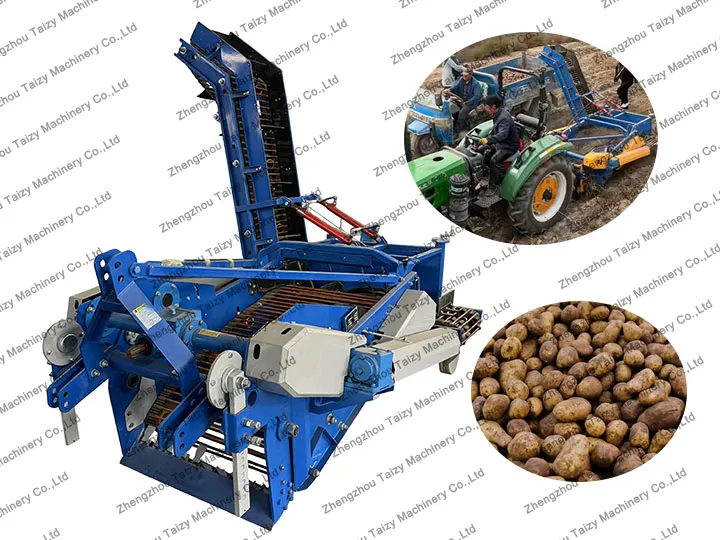
这 potato harvester is designed to continuously dig, clean, convey, and automatically load underground crops. The equipment offers three working widths: 90 cm, 110 cm, and 130 cm, and the digging depth can be adjusted between 0 and 25 cm. It is not limited to harvesting potatoes; it can also be used to harvest crops such as onions, carrots, sweet potatoes, ginger, garlic, lily bulbs, konjac, and taro.
The potato harvesting machine is equipped with automatic loading. After the crops are dug up and separated from the soil, they are directly loaded into trucks or trailers via a conveyor system, thus reducing the amount of manual collection and handling work.
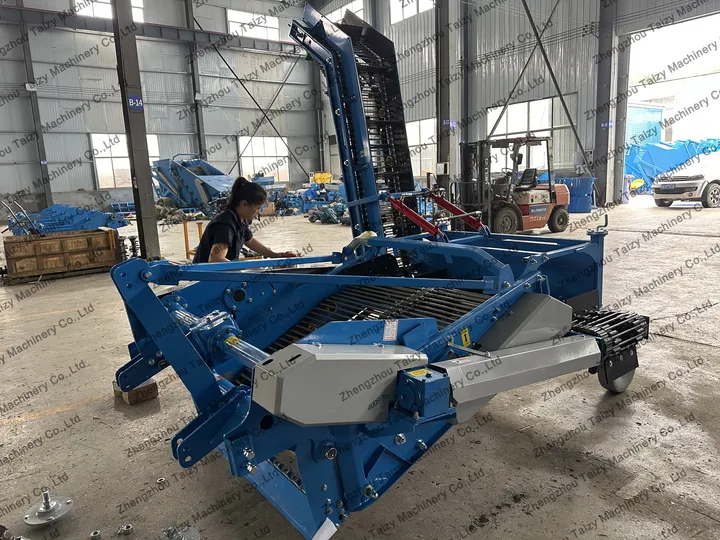
这 root crop harvester uses a continuous working process:
Digging → Soil Separation → Conveying → Automatic Loading
First, the digging blade enters the soil and lifts the potatoes together with the surrounding soil. The harvested material then moves through the cleaning section, where a cleaning roller helps separate loose soil and crop residues.
After separation, the potatoes are transferred onto a slat-chain conveyor. The conveyor continuously moves the potatoes upward and discharges them into a truck or trailer positioned beside the machine.
| 模型 | 4UDS-90 | 4UDS-110 | 4UDS-130 |
| Structural type | Three-point hitch | Three-point hitch | Three-point hitch |
| Working width | 90 cm | 110 cm | 130 cm |
| Transport dimensions | 2900 × 2200 × 2300 mm | 2900 × 2400 × 2300 mm | 2600 × 2700 × 2700 mm |
| Working dimensions | 2900 × 3000 × 1700 mm | 2900 × 3200 × 1700 mm | 2850 × 3600 × 2000 mm |
| Machine weight | 775 kg | 800 kg | 992 kg |
| Working efficiency | ≥2 mu | ≥2 mu | ≥2.9 mu |
| Digging depth | 0–25 cm | 0–25 cm | 0–25 cm |
| Conveying system | Belt conveyor | Belt conveyor | Belt conveyor |
| Engine power | ≥70 hp | ≥70 hp | ≥90 hp |
| Collection height | ≤1500mm | ≤1500mm | ≤2000mm |
Although it is primarily called a potato harvester, this machine can also be used for various underground crops under suitable field conditions.
It can be used for:
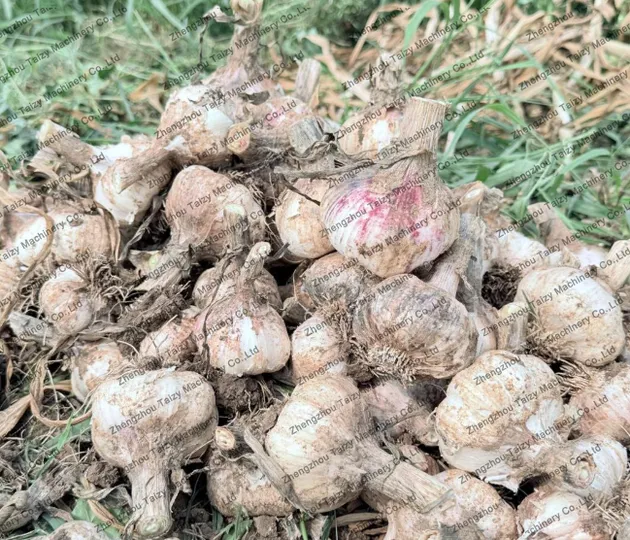
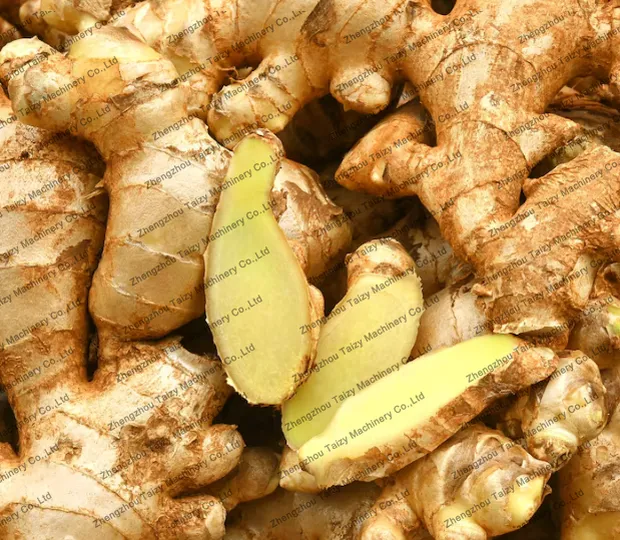
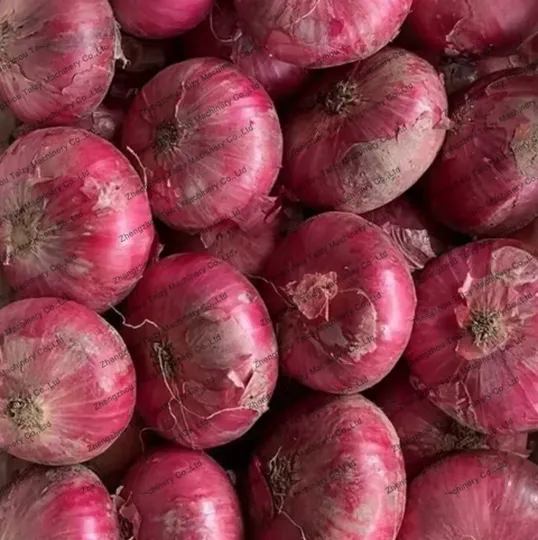
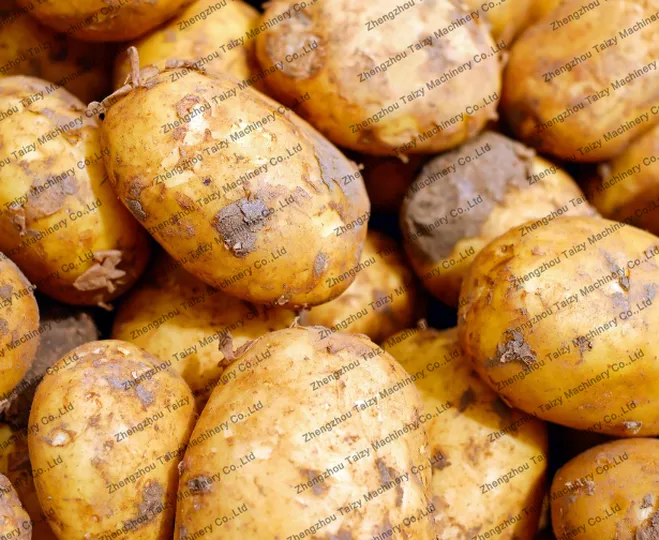
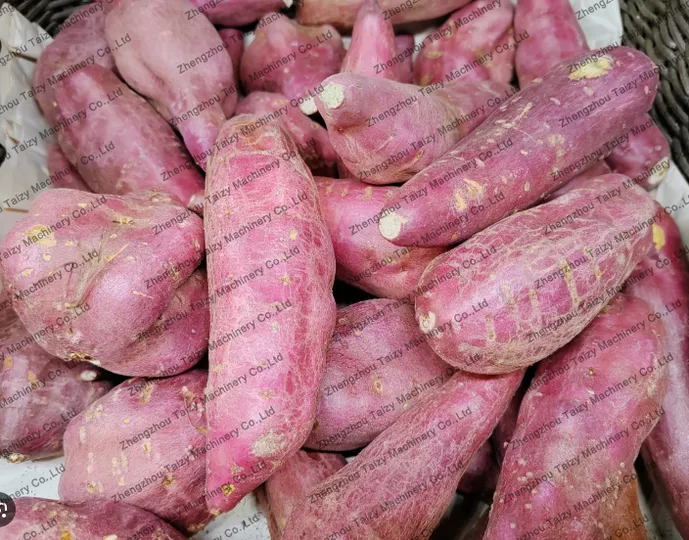
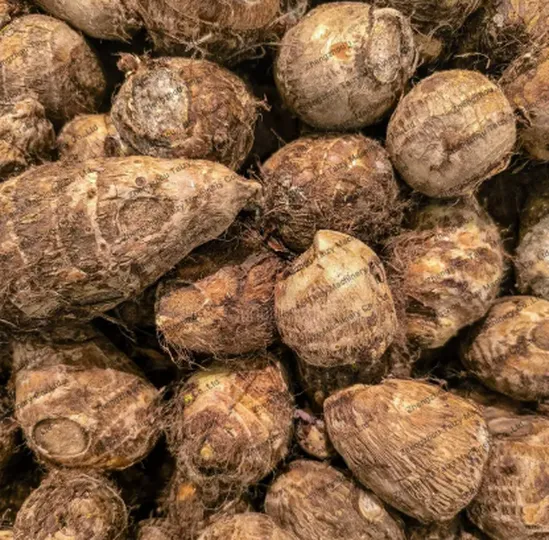
This multi-crop capability makes the machine particularly useful for farms that grow different root, bulb, and tuber crops throughout the year. Instead of purchasing separate harvesting equipment for every crop, farmers can use one root crop harvesting machine for multiple applications.
For crops with different planting depths or field conditions, operators should adjust the digging depth and machine settings accordingly.
The onion harvester price depends on the working width, machine configuration, and tractor power requirement. For example, our 4UDS series includes 90 cm, 110 cm, and 130 cm working widths, allowing buyers to choose a model according to their field size and harvesting needs.
When comparing prices, buyers should also consider features such as automatic loading, digging depth, conveyor system, and cleaning device, rather than looking only at the initial machine cost.
For an accurate price, please contact us with your preferred model and destination country. We can provide a detailed quotation based on your requirements.
The automatic loading function is one of the most noticeable advantages of this carrot harvester.
The harvested potatoes are lifted by the conveyor and loaded directly into a transport truck. Workers do not need to repeatedly collect potatoes from the field and carry them to a separate vehicle. This creates a more continuous harvesting workflow.
In addition, the conveyor height and position can be adjusted to work with the receiving vehicle, helping make the loading process more convenient.
The main function of a potato digger is to excavate potatoes from the soil, while a konjas harvester integrates digging, soil removal, conveying, and automatic loading functions.
When comparing ginger harvesters and basic potato diggers, the key difference lies not only in digging capacity but also in the post-digging processing procedures. Thanks to the automatic loading function, the harvested crops from the garlic harvester can be directly transferred from the field to the transport vehicle, reducing manual handling, thereby lowering labor costs and greatly improving work efficiency.
For customers planning to further process harvested potatoes into potato chips or French fries, efficient harvesting is only the first step. After harvesting, the potatoes can be cleaned, peeled, cut, blanched, fried, and packaged through a complete processing system.
You can learn more about our 薯片生产线 to build a complete solution from raw potato harvesting to finished products.